
The Best Climate Change Books: A 2026 Reading List
As an Amazon Associate I earn from qualifying purchases. How we handle affiliate links
Start with Not the End of the World by Hannah Ritchie for a data-led case that the problems are solvable, How to Avoid a Climate Disaster by Bill Gates for what it takes to reach zero emissions, and The Uninhabitable Earth by David Wallace-Wells for what is at stake. For the numbers behind everyday choices, read The Carbon Footprint of Everything by Mike Berners-Lee.
There are hundreds of climate books. These 14 are the ones most worth your time in 2026: books by scientists, data researchers and practitioners that explain what is happening, what it means, and what can be done. They are grouped by what you want from them, from solutions and science to the carbon numbers behind daily life, plus one novel.
The 14 books at a glance
| # | Book | Best for |
|---|---|---|
| 1 | How to Avoid a Climate Disaster Bill Gates, 2021 | A clear overview of where emissions come from |
| 2 | Speed & Scale John Doerr, 2021 | A plan with measurable targets |
| 3 | Drawdown Edited by Paul Hawken, 2017 | Comparing solutions side by side |
| 4 | Regeneration: Ending the Climate Crisis in One Generation Paul Hawken, 2021 | Nature-based solutions |
| 5 | Electrify Saul Griffith, 2021 | Homeowners thinking about their own house |
| 6 | The Uninhabitable Earth David Wallace-Wells, 2019 | Understanding why the stakes are high |
| 7 | The Sixth Extinction Elizabeth Kolbert, 2014 | The biodiversity side of the story |
| 8 | Under a White Sky Elizabeth Kolbert, 2021 | A clear-eyed look at engineering our way out |
| 9 | The New Climate War Michael E. Mann, 2021 | Understanding the politics of climate action |
| 10 | Not the End of the World Hannah Ritchie, 2024 | Anyone who finds climate news overwhelming |
| 11 | The Carbon Footprint of Everything Mike Berners-Lee, 2022 | Practical, everyday numbers |
| 12 | Sustainable Energy – Without the Hot Air David MacKay, 2009 | Readers who like to do the sums |
| 13 | Saving Us Katharine Hayhoe, 2021 | Conversations with family, friends and colleagues |
| 14 | The Ministry for the Future Kim Stanley Robinson, 2020 | Imagining how the next few decades could unfold |
Books about climate solutions
Start here if you want to know what actually cuts emissions, how much each fix is worth, and what it costs.
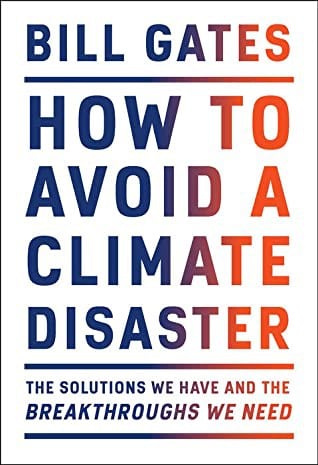
How to Avoid a Climate Disaster
Bill Gates · 2021 · Microsoft co-founder; founded the clean-energy investor Breakthrough Energy
Best for: a clear overview of where emissions come from
Gates starts from the 51 billion tons of greenhouse gases the world adds each year and works through what it would take to get to zero across electricity, industry, farming, transport and buildings. His “Green Premium”, the extra cost of the clean option over the fossil one, is a useful lens for any decision.
Speed & Scale
John Doerr · 2021 · venture capitalist and chairman of Kleiner Perkins; written with Ryan Panchadsaram
Best for: a plan with measurable targets
A venture capitalist’s action plan for net zero by 2050, set out as objectives and key results (OKRs) for energy, transport, food, nature and industry, with interviews from people doing the work.
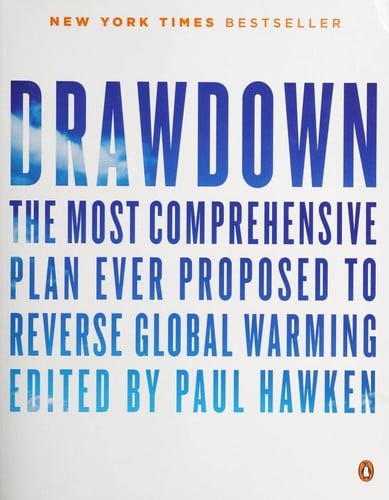
Drawdown
Edited by Paul Hawken · 2017 · founder of Project Drawdown, a research group that models climate solutions
Best for: comparing solutions side by side
Project Drawdown’s ranking of 100 solutions to global warming, from refrigerant management and food waste to onshore wind and solar, each with its estimated emissions reduction and cost.
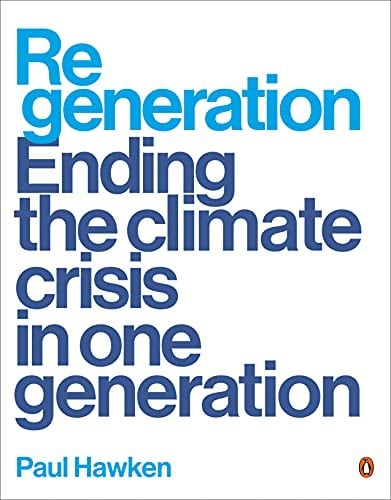
Regeneration: Ending the Climate Crisis in One Generation
Paul Hawken · 2021 · founder of Project Drawdown and Project Regeneration
Best for: nature-based solutions
Hawken’s follow-up to Drawdown puts the emphasis on restoring living systems such as forests, soils, oceans and cities, alongside cutting emissions, with practical actions for people and organisations.
Electrify
Saul Griffith · 2021 · engineer, MacArthur Fellow and co-founder of Rewiring America
Best for: homeowners thinking about their own house
An engineer’s case for electrifying American homes and vehicles: heat pumps, electric cars, rooftop solar and batteries, and the financing and rules that would make it affordable.
To see the numbers for your own home, try the heat pump installation cost calculator and the solar panel calculator.
Books about the science and the stakes
Read these to understand what warming does to people, nature and politics, from the worst cases to the fight over what to do.
The Uninhabitable Earth
David Wallace-Wells · 2019 · journalist; the book grew from his widely read 2017 New York magazine article
Best for: understanding why the stakes are high
Wallace-Wells sets out what warming could mean for heat, food, water, disease, the economy and conflict. It is deliberately alarming; his later writing is more measured about the worst cases.
The Sixth Extinction
Elizabeth Kolbert · 2014 · staff writer at The New Yorker; the book won the 2015 Pulitzer Prize for General Nonfiction
Best for: the biodiversity side of the story
Kolbert reports from scientists’ field sites on how human activity, including climate change, is driving species loss on a scale the planet has seen only five times before.

Under a White Sky
Elizabeth Kolbert · 2021 · staff writer at The New Yorker and Pulitzer Prize winner
Best for: a clear-eyed look at engineering our way out
Kolbert looks at people trying to fix problems caused by earlier interventions, from electrified barriers against invasive carp near Chicago to coral breeding and proposals to dim sunlight.
The New Climate War
Michael E. Mann · 2021 · climate scientist, now at the University of Pennsylvania
Best for: understanding the politics of climate action
Mann argues that the fight has moved from denying climate change to delaying action, for example by putting the focus on individual choices instead of policy.
Books about carbon numbers and data
The closest books to what GreenCalculus does: real numbers you can check, and a sense of which choices are big and which are small.

Not the End of the World
Hannah Ritchie · 2024 · data scientist at Our World in Data
Best for: anyone who finds climate news overwhelming
Ritchie uses long-run data on seven problems, including air pollution, climate change, deforestation, food and biodiversity, to argue that a sustainable future is achievable.
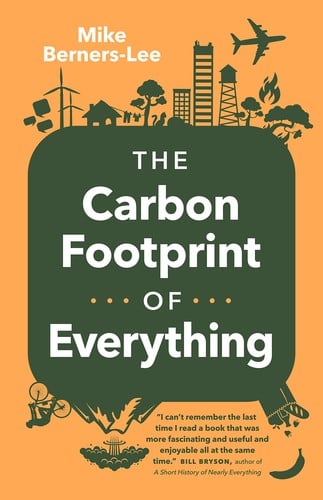
The Carbon Footprint of Everything
Mike Berners-Lee · 2022 · professor at Lancaster University and founder of Small World Consulting
Best for: practical, everyday numbers
The updated edition of How Bad Are Bananas?: the carbon footprint of everyday things, from a text message to a flight, so you can see which choices matter and which barely register.
GreenCalculus has the factors behind many of them: try the personal carbon footprint calculator.

Sustainable Energy – Without the Hot Air
David MacKay · 2009 · Cambridge physicist and former chief scientific adviser to the UK energy department
Best for: readers who like to do the sums
MacKay adds up how much energy a country uses and how much renewables could supply, in plain units. It is still the best book for checking energy claims with simple arithmetic.
Buy on Amazon Read it free on the author’s site Borrow from a library Goodreads reviews
A book about talking about climate
For when the hard part is not the science but the conversation.

Saving Us
Katharine Hayhoe · 2021 · atmospheric scientist at Texas Tech University and chief scientist at The Nature Conservancy
Best for: conversations with family, friends and colleagues
Hayhoe explains how to talk about climate change with people who see the world differently, by starting from values you share rather than from the science.
A climate novel
One story, because fiction reaches people that reports do not.
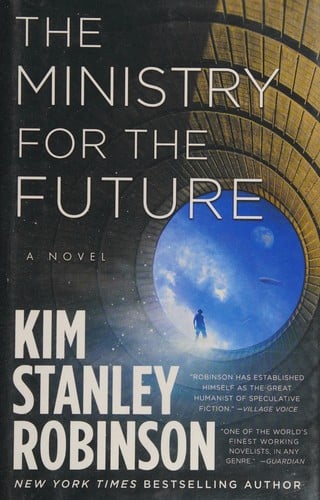
The Ministry for the Future
Kim Stanley Robinson · 2020 · science-fiction novelist, best known for the Mars trilogy
Best for: imagining how the next few decades could unfold
The novel opens with a deadly heatwave in India and follows an agency set up to speak for future generations over the following decades, mixing story with economics and policy ideas.
How these books were chosen
Every book on this list had to pass four tests:
- Written by someone who works on the subject. A scientist, researcher, engineer or specialist reporter, named with their role on each card above.
- Still useful in 2026. Its central argument still holds. Where a book has dated, the card says so, as with the worst-case framing in The Uninhabitable Earth.
- In print and easy to get. Every title is on sale, and most are in public libraries.
- Part of a balanced list. Solutions, science, data and politics are all covered, so no single viewpoint dominates, plus one novel.
We checked every edition, author, ISBN and publication year against Open Library and the Amazon listing in October 2026. Each cover is the edition the “Buy on Amazon” button sells. Publishers and authors do not pay to be included. GreenCalculus earns a small commission from Amazon if you buy through these links, which does not affect which books appear here. If you would rather not buy, the “Borrow from a library” link finds a copy near you through WorldCat.
For the numbers behind the books, GreenCalculus publishes sourced emission factors and calculators. A good starting point is what a carbon footprint is and the greenhouse gases behind it.
Frequently asked questions
How to Avoid a Climate Disaster by Bill Gates is the clearest overview of where emissions come from and what it would take to reach zero. If climate news leaves you anxious, start with Not the End of the World by Hannah Ritchie, which uses long-run data to show what has already improved.
Not the End of the World (Hannah Ritchie), The Carbon Footprint of Everything (Mike Berners-Lee) and Sustainable Energy – Without the Hot Air (David MacKay) are all built on numbers you can check. Drawdown ranks 100 solutions by their estimated effect.
The Ministry for the Future by Kim Stanley Robinson (2020) is the best known. It opens with a deadly heatwave in India and follows the decades of politics, economics and technology that come after.
Yes. David MacKay’s Sustainable Energy – Without the Hot Air is free to read online at withouthotair.com. Most of the others are also available from public libraries.